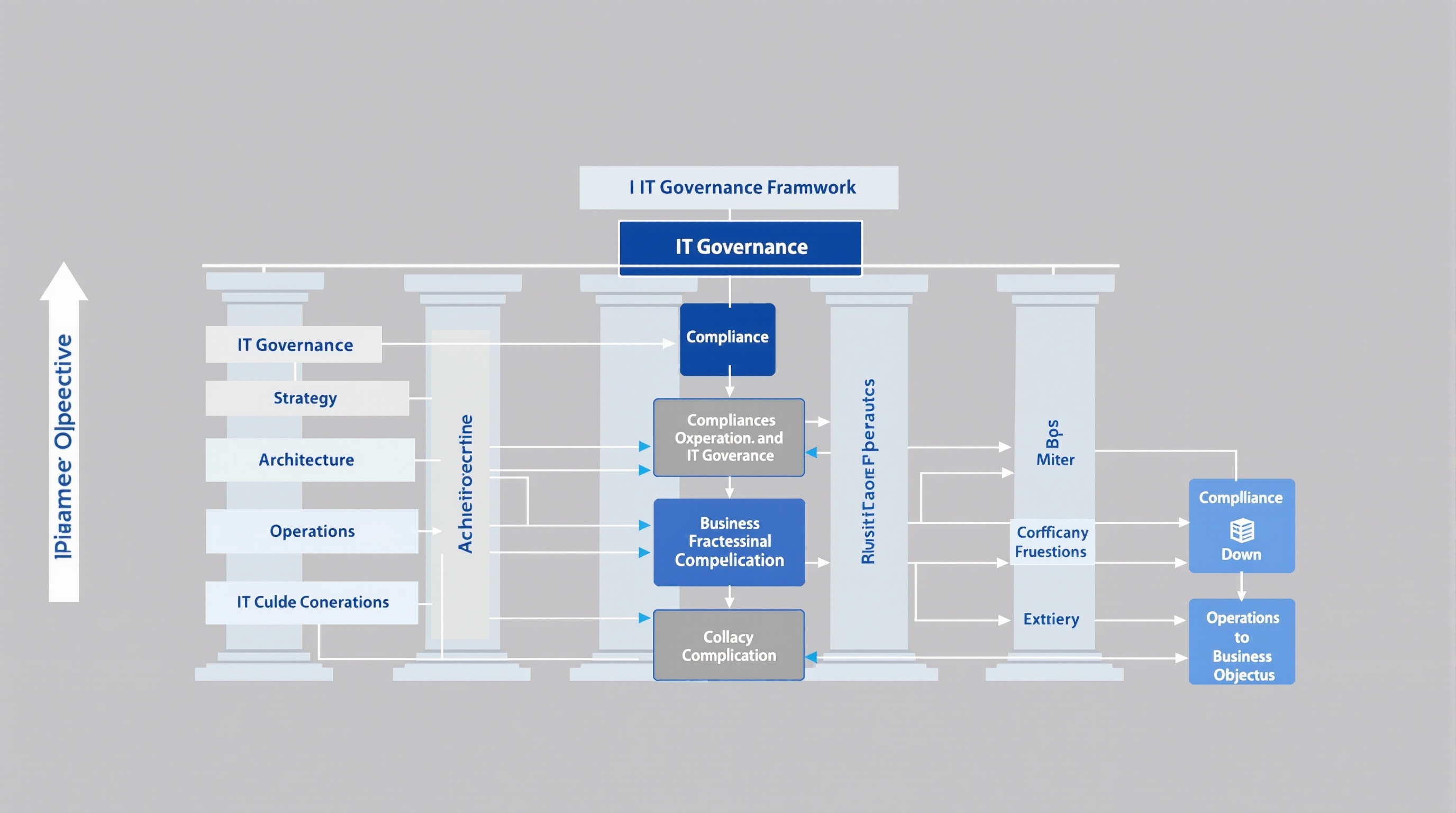
In today’s rapidly evolving digital landscape, organizations cannot afford to overlook the importance of IT governance. With technology driving business strategy, effective IT governance frameworks are essential for aligning IT investments with organizational objectives, managing risks, and ensuring optimal resource allocation. This article will provide a comprehensive overview of IT governance frameworks, their significance, and how they can be implemented to enhance business performance.
I. Understanding IT Governance
A. Definition of IT Governance
IT governance refers to the processes, roles, and responsibilities that ensure effective and efficient use of IT in enabling an organization to achieve its goals. It encompasses decision-making frameworks that guide how IT resources are allocated, managed, and monitored.B. Importance of IT Governance
Effective IT governance supports:- Strategic Decision-Making: Ensures that IT initiatives align with business objectives.
- Risk Management: Helps identify and mitigate IT-related risks.
- Accountability: Establishes clear roles and responsibilities for IT decision-making.
- Strategic Alignment: Ensuring IT initiatives support business strategy.
- Risk Management: Identifying and mitigating IT-related risks.
- Resource Management: Efficient and effective use of IT resources.
- Performance Measurement: Monitoring and evaluating IT performance against objectives.
- Improved Decision-Making: Ensures informed choices about IT investments.
- Enhanced Accountability: Clearer roles and responsibilities lead to better accountability.
- Greater Alignment Between IT and Business Goals: Ensures IT supports business strategy.
- Increased Value from IT Investments: Maximizes the return on IT expenditures.
- Resistance to Change: Employees may be reluctant to adopt new governance structures.
- Lack of Executive Support: Without buy-in from leadership, initiatives may falter.
- Insufficient Training and Resources: A lack of training can hinder effective implementation.
- Overview: COBIT provides a comprehensive framework for developing, implementing, monitoring, and improving IT governance and management practices.
- Key Benefits: - Improved risk management. - Enhanced compliance with regulations. - Clear alignment between IT and business objectives.
- Explanation: ITIL focuses on IT service management, emphasizing the alignment of IT services with business needs.
- Relationship to IT Governance: ITIL supports governance by providing best practices for managing IT services effectively.
- Introduction: This international standard offers a framework for evaluating, directing, and monitoring IT use in organizations.
- Principles: - Responsibility: Ensure accountability for IT decisions. - Strategy: Align IT with the organization’s strategies. - Acquisition: Ensure IT investments are sound.
- Overview: The NIST Cybersecurity Framework provides a policy framework for cybersecurity risk management.
- Integration with IT Governance: It emphasizes risk management practices that can be integrated into broader IT governance strategies.
- TOGAF: The Open Group Architecture Framework focuses on enterprise architecture.
- Agile Governance: Adapts governance principles to agile methodologies.
- SAS 70: Provides assurance on controls and processes for service organizations.
- Engaging Stakeholders: Secure executive buy-in and involve key stakeholders.
- Continuous Training and Development: Provide ongoing education for staff.
- Regularly Reviewing and Updating the Framework: Adapt to changes in technology and business needs.
- Governance Dashboards: Provide visual insights into governance metrics.
- Risk Management Software: Help identify and manage risks effectively.
- IT ROI: Measure the return on IT investments.
- Compliance Rates: Track adherence to governance policies and frameworks.
- Regular Audits: Conduct audits to assess governance effectiveness.
- Compliance Checks: Ensure that all processes meet established standards.
- Stakeholder Feedback: Gather input from stakeholders to identify areas for improvement.
- Be Agile: Use performance data to inform decisions and adapt strategies as necessary.
- Finance: A bank implemented COBIT, resulting in improved risk management and regulatory compliance.
- Healthcare: A hospital adopted ITIL, leading to enhanced service delivery and patient satisfaction.
- Example: A technology firm faced significant data breaches due to ineffective governance, highlighting the need for robust risk management practices.
- IT governance frameworks are critical for aligning IT with business objectives.
- Successful implementation requires stakeholder engagement, training, and regular review.
- Organizations must measure effectiveness and be prepared to adapt strategies based on performance data.
C. Key Components of IT Governance
The key components include:II. Comprehensive Overview of IT Governance Frameworks
A. What is an IT Governance Framework?
An IT governance framework is a structured approach to align IT strategy with business goals. It defines the processes, roles, and responsibilities necessary for managing IT resources, risks, and performance effectively.B. Benefits of Implementing an IT Governance Framework
Implementing an IT governance framework can lead to:C. Challenges in Implementing IT Governance
Organizations may face challenges such as:III. Key IT Governance Frameworks and Standards
A. COBIT (Control Objectives for Information and Related Technologies)
B. ITIL (Information Technology Infrastructure Library)
C. ISO/IEC 38500
D. NIST Cybersecurity Framework
E. Other Notable Frameworks
IV. Implementing an IT Governance Framework
A. Steps to Develop an IT Governance Framework
1. Assess Current IT Governance Maturity: Understand where you stand. 2. Define Governance Roles and Responsibilities: Clarify who is responsible for what. 3. Establish Policies and Procedures: Document governance processes. 4. Implement Monitoring and Reporting Mechanisms: Track progress and compliance.B. Best Practices for Successful Implementation
C. Tools and Technologies to Support IT Governance
V. Measuring the Effectiveness of IT Governance
A. Key Performance Indicators (KPIs) for IT Governance
B. Techniques for Monitoring Performance
C. Adjusting Governance Strategies Based on Performance Data
VI. Case Studies and Real-World Applications
A. Successful Implementation of IT Governance Frameworks
B. Lessons Learned from IT Governance Failures
Conclusion/Call-to-Action
In an era where technology is deeply intertwined with business objectives, adopting a robust IT governance framework is not just beneficial—it’s essential. Organizations that prioritize effective IT governance are better positioned to manage risks, improve decision-making, and ultimately drive business success. Start evaluating your current governance practices today and consider implementing a framework that aligns with your strategic goals.---
Key Takeaways
By understanding and implementing effective IT governance frameworks, organizations can enhance their operational efficiency and achieve greater business success.


